
(Find me at Bookers Buzz Books.)
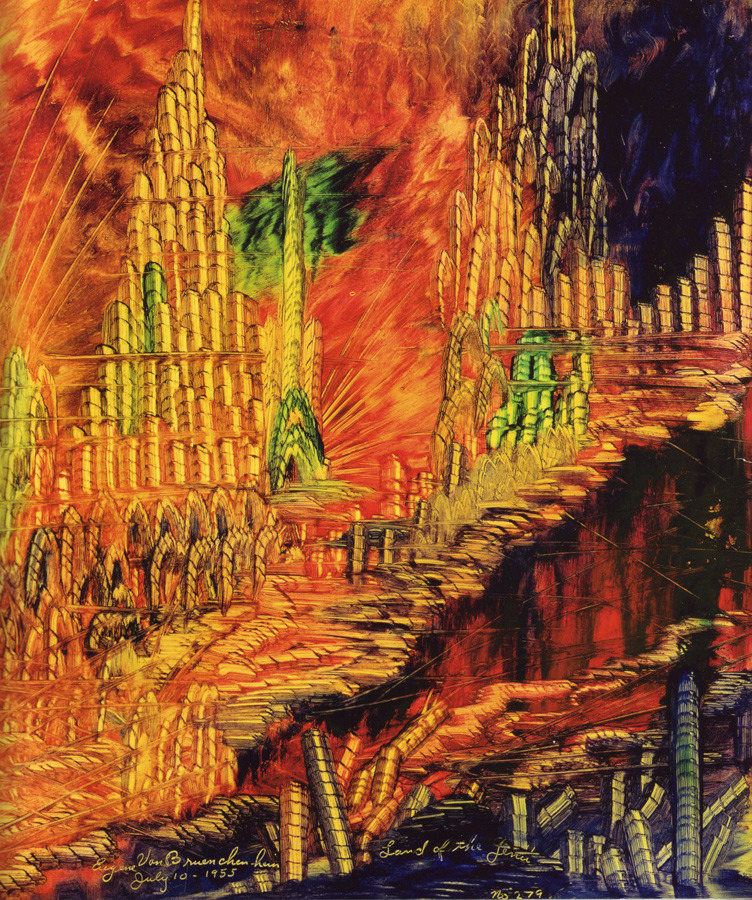
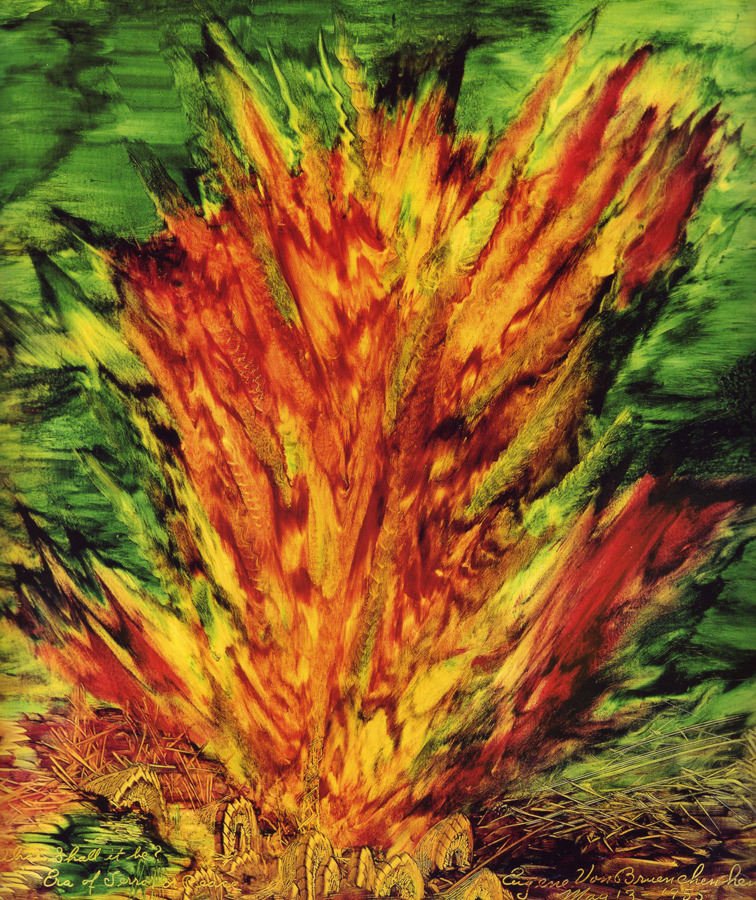
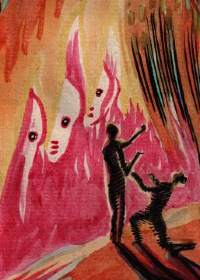
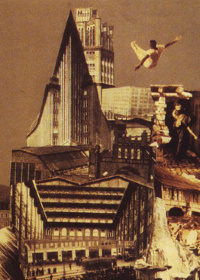
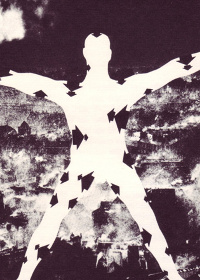
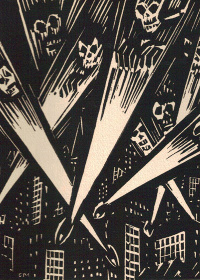
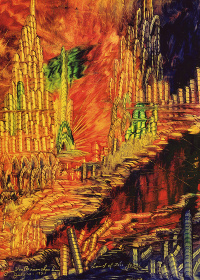
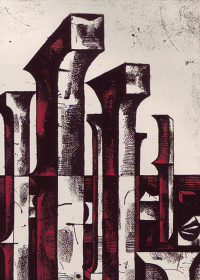
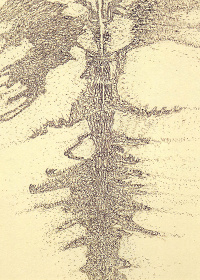
Eugene Von Bruenchenhein, Apocalyptic cityscape in flames (1955)
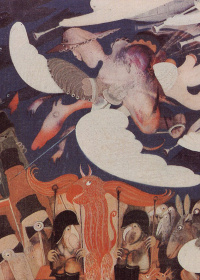
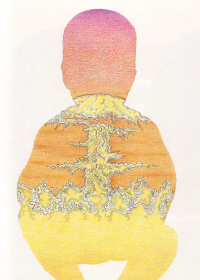
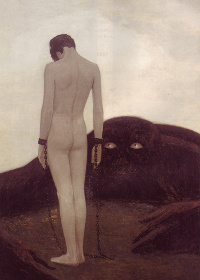
from The End is Near: Visions of Apocalypse, Millenium, and Utopia
The Apocalyptic Longing: Looking toward 2012
by Christopher Spranger
No Voice
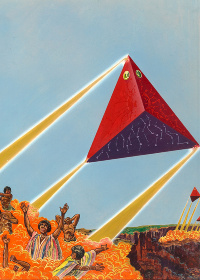
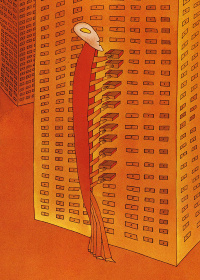
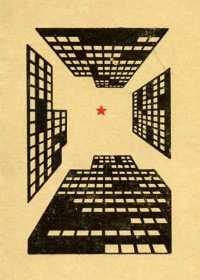
It is high time we recognized and overcame our tendency to try and confer legitimacy on prophecies we are keen to advance by evoking some mystifying phrase or artifact from an alien culture or a moribund tradition. When a Zarathustra or a Christ said the end was near, he said it with his own voice, while immersed in the specific atmosphere of his own epoch—and the same may be said of the Mayans: if they did indeed nourish this belief about the end now assigned to them by some, then it had its source not in the prophecies of some previous civilization with whom they had no connection but in their own unique spirit as a people. But precisely what the Mayans believed we will never with any certainty know—and the "Mayan vision of the end" as it emerges in contemporary discourse is really but our own desire, exotically disguised. We can either continue to deck out 2012 in quetzal feathers and jaguar skins, or we can find the integrity to claim it as our own and adhere to it as such, plainly acknowledging it as the latest date to which our apocalyptic longing has affixed itself. Why must the man of today be standing atop the pyramid of Kukulkan before he can work up the courage to proclaim the end? It would be better for him to proclaim it from within his own historical and cultural milieu, even if he feels like a fool or a madman for prophesying unbolstered by cryptic pronouncements craftily pilfered from ancient pyramid builders. Breaking free of the spell cast by the tantalizing enigmas of the Mesoamerican jungle, why don’t we shriek the coming of the end from within this ever-expanding labyrinth of skyscrapers in which we have imprisoned ourselves and from which there is a perpetually diminishing chance we shall ever find our way out? Surely a skyscraper is a more apocalyptically significant building than a pyramid? Every time I look at one I feel as if I were in the presence of an ominous sign. Lightning striking temples and tombs, water and wheat discolored by blood, a rain of milk or red-hot stones, an ox talking to a vulture, a male baby born with an elephant's head, the sea catching fire, the sun locked in combat with the moon: these are among the most baleful prodigies cited by Livy as preceding events ruinous to the Roman empire—but which of them is not eclipsed in balefulness by the mere countenanced existence of a skyscraper? That such monstrosities are erected and tolerated as a part of the modern landscape cannot bode well. But turning a blind eye to the demon on our doorstep, we prefer to prowl around abandoned pyramids in search of sinister portents. I don't understand why there is not already on each street corner a prophet with dazzling eyes and disheveled hair announcing the end. Where are these men so urgently required by the present moment? I implore at least one of them to come forth from the unraveling fabric of our society: how refreshing it would be to encounter, at last, someone whose occupation I could admire and praise! If a people or an epoch does not speak with its own voice, one must be forgiven for wondering if perhaps that people or that epoch has no voice of its own to speak with...
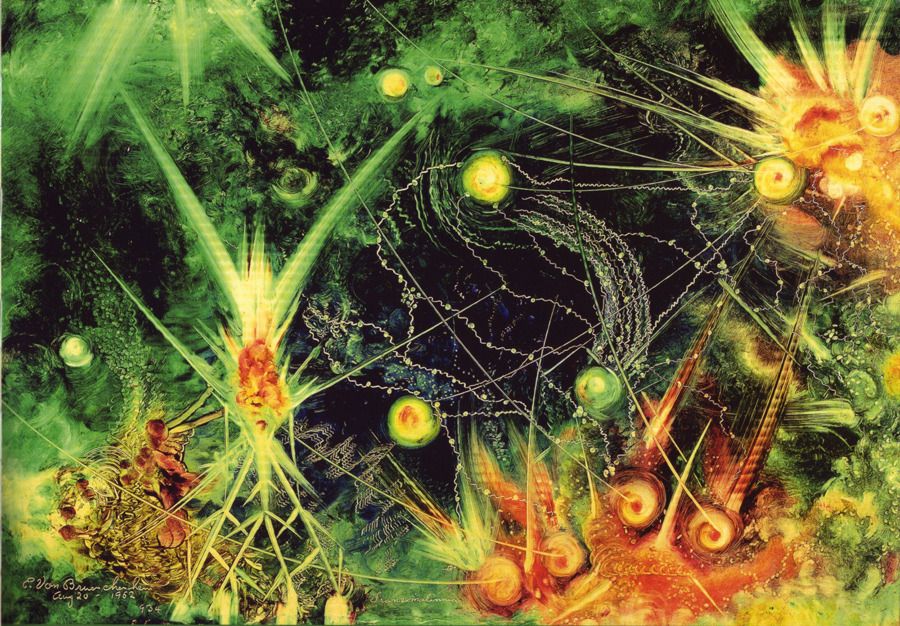
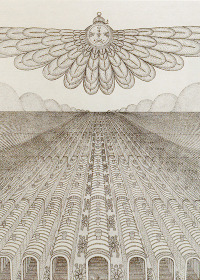
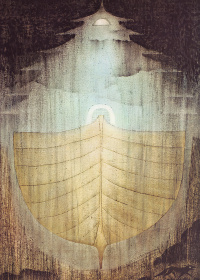
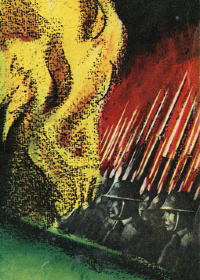
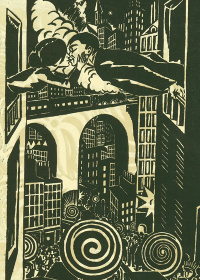
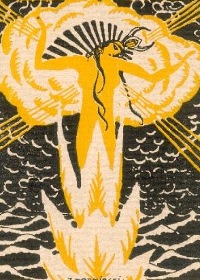
Eugene Von Bruenchenhein, Cataclysm (1962)
from The End is Near: Visions of Apocalypse, Millenium, and Utopia
"No Voice" is the first installment of a longer project by Christopher Spranger. He described it to me in an email:
Expectantly I open the paper in the morning and turn on the news at night, but I've yet to see a report on the apocalypse. Why—because it hasn't yet happened? As if that were an excuse!
Is it possible that the most important event—I'd almost said, the only important event—is the one which is least meditated on? Fearing this to be so, I've set my mind to the subject [in] an essay to be titled The Apocalyptic Longing: Looking toward 2012.