
(Find me at Bookers Buzz Books.)
Passages from The Child by Jules Vallès (trans. Douglas Parmee, NYRB Classics). The book is dedicated "To all those who were bored stiff at school or reduced to tears at home, who in childhood were bullied by their teachers or thrashed by their parents"

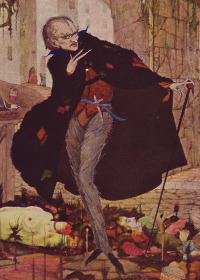
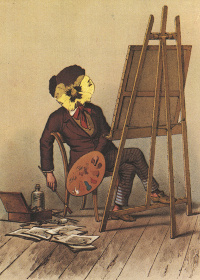
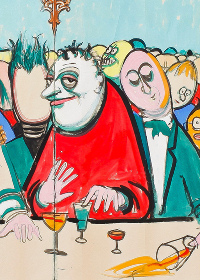
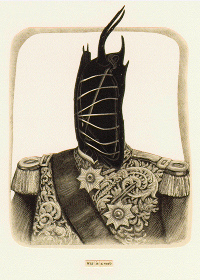
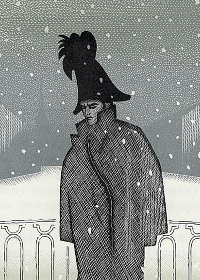
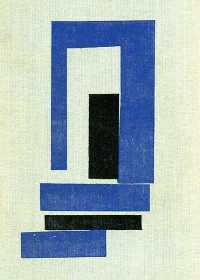
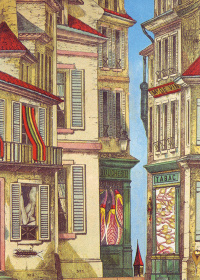
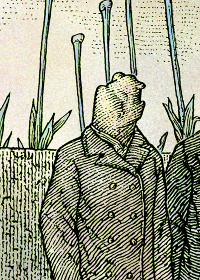
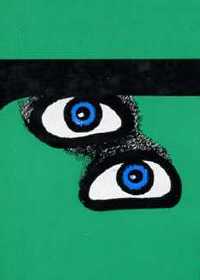
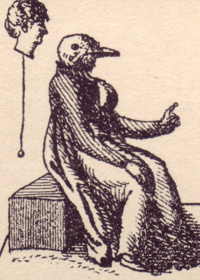
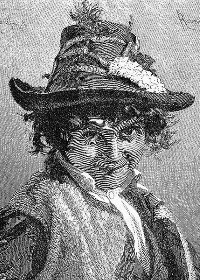
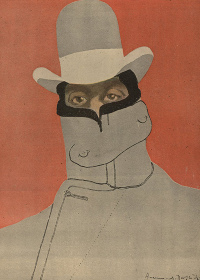
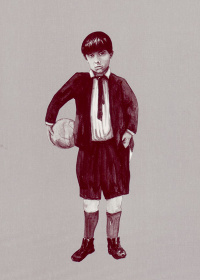
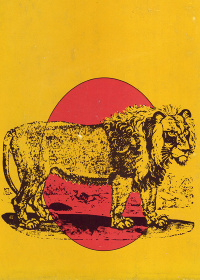
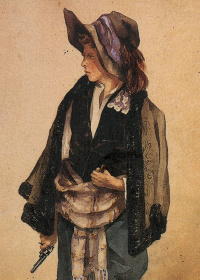
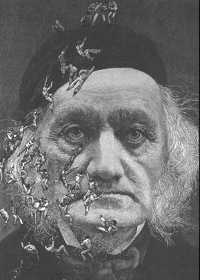
cover illustration: Honoré Daumier, The Young Man Who Is the Hope and Pride of the Badinguet Family, (typically great) cover design by Katy Homans
Was I breast-fed by my mother? Did I get my milk from some peasant wet nurse? I just don't know. But whatever breast I may have gnawed at, I don't remember, when I was tiny, ever being cuddled, made a fuss of, pampered, indulged, given little kisses...I was given lots of beatings.
My mother says: spare the rod and spoil the child. And every morning she gives me a beating; if she doesn't have time in the morning, she'll save it until the afternoon, hardly ever later than four o'clock. [These are the opening paragraphs!]
***
The philosophy teacher—Monsieur Beliben: short, slight, with a pint-sized head, three wispy hairs, and a thready, vinegary voice.
He was very fond of proving the existence of God, but if anyone tried to interject a comment, even in support, he'd indicate that he objected to being interrupted; he needed the whole table, just like a game of patience.
He proved the existence of God with little bits of wood and a few beans.
"Here we place a bean, so! And there a match. Do you have a match, Madame Vingtras? And now I've set out man's vices and his virtues there, I come to the PROPERTIES OF THE SOUL!"
Often at this stage people who weren't in the know looked toward the door to see if someone was coming in. Or they looked at his pocket to see if he was going to pull something out. The properties of the soul! This was the upper crust, real high-quality stuff! My mother was flattered.
"Here they come!"
In spite of ourselves we still keep turning our heads to welcome these distinguished people, but Beliben took you by your overcoat button and rapped impatiently on the table. Hang it all! Did they or didn't they want to prove the existence of God? [...]
We had to sit it out to the bitter end until finally the little man pushed back his chair, stretched out his hand, and pointed to one corner of the table: "That's God THERE."
We were all still watching, with everyone crowding around to see the beans together in one corner, with the matches, the bits of cork, and various other bits and pieces of rubbish that he'd used for his demonstration of the SUPREME BEING.
Apparently all the virtues and vices and properties of the soul had finished up, in-ev-i-ta-bly, in the last heap. Every bean was present and correct. Therefore GOD EXISTS. QED.
***
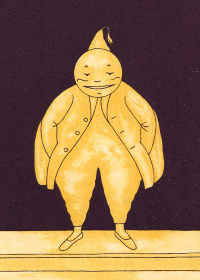
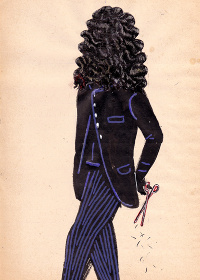
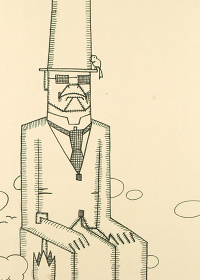
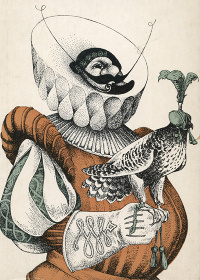
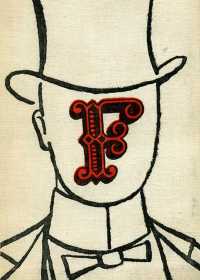
I'm often dressed in black because "black is always in fashion," and when I'm wearing a coat—a tailcoat—and a top hat, I look like a stove.
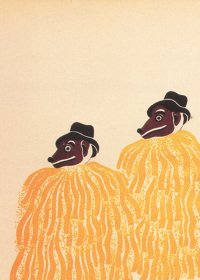
However, as I wear out my clothes very quickly, they bought for me, in some country place, a fluffy yellow material to wrap me in. I look like the ambassador of Lapland. Foreigners raise their hats to me; academics eye me closely.
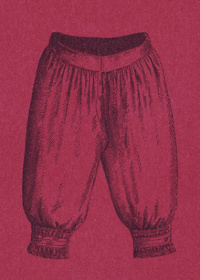
But the cloth my pants are made out of gets very stiff and dry, making me sore and even drawing blood.
What rotten luck! From now on I won't be able to live a normal life, I'll just have to shuffle around.
I'll be barred from all the usual children's pursuits—playing prisoner's base, running, jumping, getting into fights. I shamble around on my own, sneered at or pitied, just useless! And at the age of twelve, in the center of my hometown, segregated in these trousers, I'm doomed to suffer the secret anguish of an exile.
***
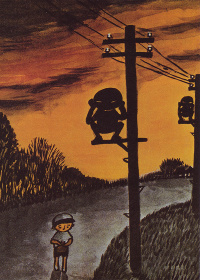
I watch night ebbing away and dawn coming in; a kind of white smoke is rising on the horizon.
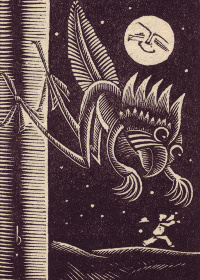
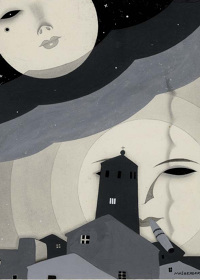
Like a murderer, I saw the hours of darkness passing, one at a time, in front of me; while other children slept, my eyes remained open; I've followed the round moon across the sky, sightless like the face of a madman; I listened to the pounding of my innocent heart above the silence of my bedroom. A cold draft of old age swept through my life, snow fell on me. I feel that disaster has overwhelmed me.
***
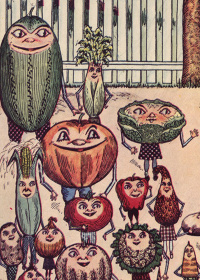
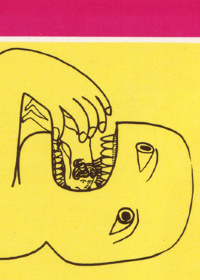
Onions are an abomination...
Every Thursday and Friday, we eat onions and ground meat and for seven years I've never been able to eat onions and ground meat without being sick.
This vegetable disgusts me.
Yes, just like a rich man! Heavens above! Arrogant, miserable little boy that I am, I allowed myself the luxury of not liking this, that, and the other, and looked unwilling when I was given something I didn't like... I mollycoddled myself. Above all I attached too much importance to my own feelings, let the smell of onions turn my stomach -- what I called my stomach, let's be quite clear, because I don't know if poor people have a right to have stomachs.
"You must force yourself," my mother would shout. "You're doing it on purpose," she'd add, "like you always do."
That was her endless refrain: "You're doing it on purpose."
But luckily she had grit and determination, and five years later, when I went into the fourth form, I was able to eat onions and ground meat. She'd shown me that you can succeed in doing anything, that it's all a matter of willpower.
As soon as I'd managed to eat onions and ground meat, she stopped cooking it. What was the point? It cost as much as anything else and it smelled dreadful. Her method had carried the day; that was all she wanted -- and later on, whenever I faced a problem, she'd say, "Now remember onions and ground meat, Jacques. For five years you couldn't keep them down and at the end of that time, you could. Just remember, Jacques!"
I remembered, all too well.
***
I've wanted to plug this book for a couple years. It's a favorite of editor Edwin Frank, as he described in a piece on his favorite NYRB Classics:
Richard Sieburth told me about this, saying it was the funniest book in French after Rabelais. And it is wonderfully funny, even if the subject is a very grim childhood under the thumb of an abusive mother and a social-climbing father. The novel might be called the "making of a born rebel," and Valles's bold, terse, irreverent style comes through in the book's dedication "to all those who were bored stiff at school or reduced to tears at home, who in childhood were bullied by their teachers or thrashed by their parents." From then on, there's no going back.
I missed NYRB Classics week, but here is Damion Searls' on his favorites.
The Child is the first of a trilogy of autobiographical novels by Jules Vallès (1832–1885). The others are Le Bachelier (The Graduate; never translated into English), and L’Insurgé (translated as The Insurrectionist and currently out-of-print).
The book is incredibly funny and incredibly moving, as I hope these passages make clear. (NYRB page; Amazon page)