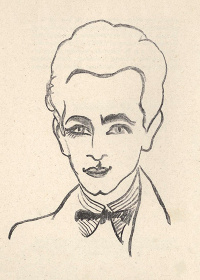

Johannes R. Becher
(Find me at Bookers Buzz Books.)
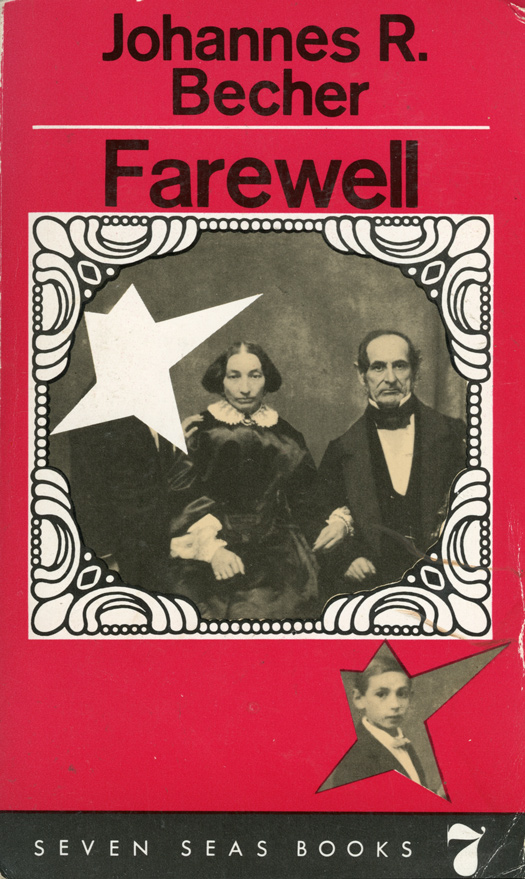
I came across the name Johannes Becher in Borges' 1938 essay "A Disturbing Exposition" (in Selected Non-Fictions). Borges talks about German authors being revised out of German literary history due to "racial pedantry." He mentions authors being "obliterated" by this process: he singles out Heine, and adds "Franz Werfel, Alfred Doblin, Johannes Becher, Wilhelm Klemm, Gustav Meyrink, Max Brod, Franz Kafka, Gottfried Benn, Martin Buber, Albert Ehrenstein, Fritz von Unruh, Kasimir Edschmid, Lion Feuchtwanger, Arnold Zweig, Stefan Zweig, Erich Maria Remarque, and Bertholt Brecht." He continues, "I do not want to list names; I need only recall that three of them—Becher, Doblin, Franz Kafka—belong to extraordinary writers and that, among the others, there is not one that in all honesty should be excluded from a history of German literature."
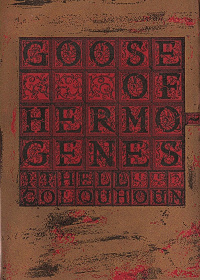
Having never heard of Becher, I searched for something available in English, and found the novel Farewell.
Bio included in the backmatter of Farewell:
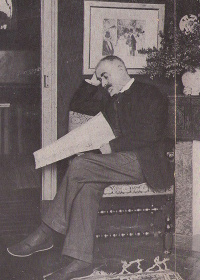
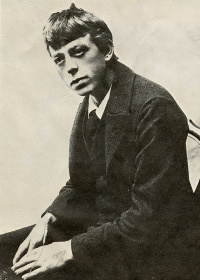
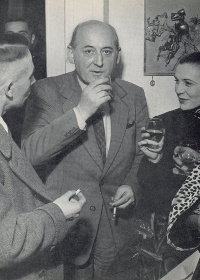
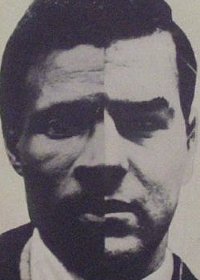
Johannes Robert Becher, born May 22, 1891, was the son of a Bavarian High Court official. He studied German linguistics, philosophy and medicine at Munich, Jena and Berlin. A slim volume of verse, published in 1914, expressed his discontent with his bourgeois milieu. In 1919, he joined the German Communist Party. He was the editor of Die neue Kunst and also later initiated Die Linkslurve, a left-wing literary journal. After publication of his novel Levisite and a volume of poetry he was brought to trial for high treason in 1928. In 1934, one year after emigrating to the Soviet Union, Becher was deprived of his German citizenship by the Nazis -- a stunning blow to one so passionately fond of his native land. At the close of the war he was amongst the first to return to Germany and immediately set about revitalizing the democratic and political traditions of progressive verse and letters. He was twice awarded the G.D.R. National Prize and in 1953 he received the Lenin International Peace Prize. In 1954 Johannes R. Becher was appointed Minister of Culture of the German Democratic Republic. He died October 11 1958, in Berlin.
I haven't read the book yet, but looking at the copyright page has lead me to a search for information about Seven Seas Books (and this post grew out of the above one concerning Seven Seas). I didn't plan to type a poem by Becher today, but I pulled out my copy of Modern German Poetry: 1910 - 1960 edited by Michael Hamburger and Christopher Middleton (translator of Jakob von Gunten), published by Grove in 1962, and I found this poem.
Recommendation: pick up Modern German Poetry, and read my post above for info on Seven Seas Books, a publisher from East Berlin.
***
Johannes R. Becher
"If I Roared"
(from the cycle 'Ecstasy Dream Grace'; 1921; trans. Christopher Middleton)
If I roared
vision-gravid bull
--belly plump from a demon's mounting me
Hurling deadly lightning from my horns at the triste finitude of your workaday landscape--
Throttling greedily fruit seed tree and the innocent body of a god beside the elegiac spring . . .
If I ripped, stamped and crushed and boxed--
Diluvial and ruthless rager--
Barbaric conqueror, striding vast over the infested valleys and fields of your wretched earth--
If I crawled up gasping through the laurel trees and lemon groves of antique seasons
Between wildernesses of dwarf pine and mountain torrent
To the forlorn caustic rubble fields sparsely strewn with the gentian's bluestars
Aloft to the redeeming womb-funnel of Etna--
Empedocles in a fever before the fatal lava-drop--
Sweat-seared and with the thick wrath-mush of impotent revolt around my gnawed mouth--
Rearing desperatestly helplessly brutal and as for a last time against the sun's impudent kick--
Again and again the hardness of my animality
Changed by enchantment into asphodel mildness--
Again and again the swords of my madness
Enleafed themselves with seraphic childhood smiles.
Again and again I was bowed down
Defenseless and tamed
In the light's last vestiges
On the scant sleep of the flocks
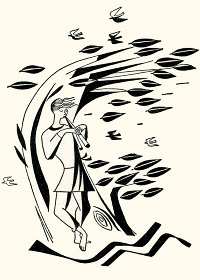
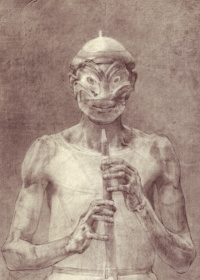
By the spice of your flute-fruit, O boys.
My hooves' murder and hell-hurricane was stilled by the miracle oil of heavenly doves.
And the bitter noonday taste vanished in the corpse-throat.
Sweetly lemons and crystal waters cooled the corrupt gorge.
. . . Spice of your flute-fruit, O boys . . .
Harnessed in the burning doom-yoke of the world. In pain.
My savagery's wrinkle smoothed. My sphere timeless and made pure again.
And from the gateways of buried eyes breaks
Long dammed
A magic radiance back into the gulfs of space.
And from my lips' edge, once accursed, the god
Pronounces blessing on the tangled net of my shoreless original sinful dreams.
Words impetuous
No longer to be uprooted from my neighbors' numbers.
Unshakeable center. Just inheritance
Of the holy angels and their one sure property.