
(Find me at Bookers Buzz Books.)
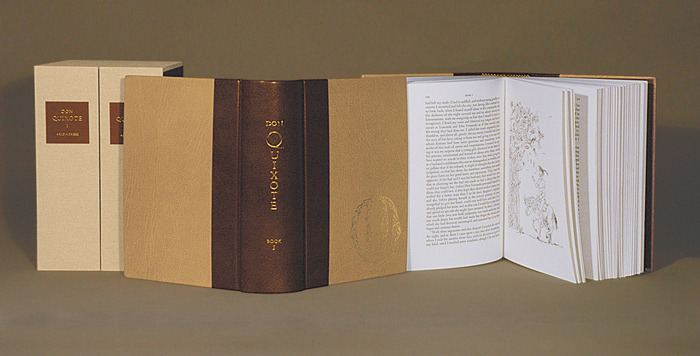
The Arion Press edition of Don Quixote
A guest post by Jonathan D. Lippincott, author of Large Scale: Fabricating Sculpture in the 1960s and 1970s. You can learn more about Large Scale at www.largescalethebook.com.
Recently, I had the pleasure of attending a conversation between translator Edith Grossman, artist William T. Wiley, and Andrew Hoyem, publisher and book designer of Arion Press, who gathered at the Queen Sofia Spanish Institute here in New York City to discuss Arion Press’s new edition of Miguel de Cervantes' Don Quixote. This edition has been created using Grossman’s 2003 translation, with illustrations throughout by Wiley. Designed by Hoyem, the book was typeset, printed and bound at Arion Press in San Francisco. The press publishes three or four limited edition books each year, often combining classic texts with contemporary artists. This edition of Don Quixote was over two years in the making, and clearly reflects the remarkable craftsmanship of Arion Press’s typographers, printers, and bookbinders.
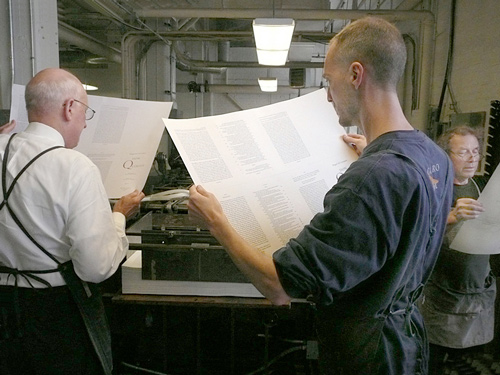
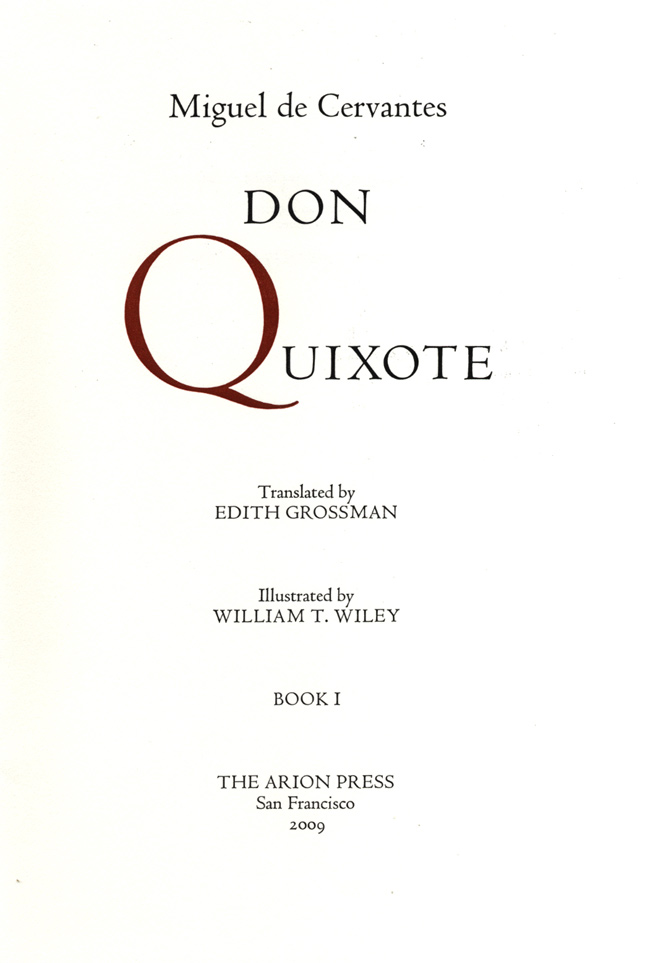
Left to right: Publisher Andrew Hoyem, Blake Riley, and Gerald Reddan press check the title page from
book I of Don Quixote during production.
Edith Grossman is a renowned translator of Spanish-language literature, and in addition to Don Quixote has translated works by Carlos Fuentes, Mario Vargas Llosa, and Gabriel Garcia Marquez. She called Quixote “the first modern novel,” and said that a novel as great and as important as Quixote always called for new translations, and for new illustrations as well. Cervantes' work was originally published in two volumes, the first in 1605, the second in 1615. The first translation into English appeared in 1611, and other translations quickly appeared across Europe and around the world, including several in Native American languages.
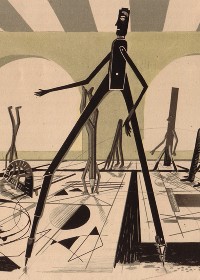
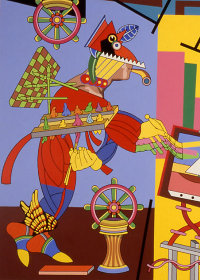
The first fully illustrated edition of Don Quixote appeared in Frankfurt in 1648. William Wiley mentioned being somewhat daunted by the thought of joining the company of such artists as Fragonard, Goya, Doré, Dali and Picasso, who had all created illustrations inspired by the novel. When Hoyem first approached him about the project, he joked that he couldn’t do the illustrations because “its too much me!” and indeed Wiley and Quixote are similarly tall and lanky. Quixote also rather resembles the wise and foolish character of Mr. Unnatural, who appeared in several of Wiley’s paintings and drawings, and was a persona that Wiley also played in some of his performances.
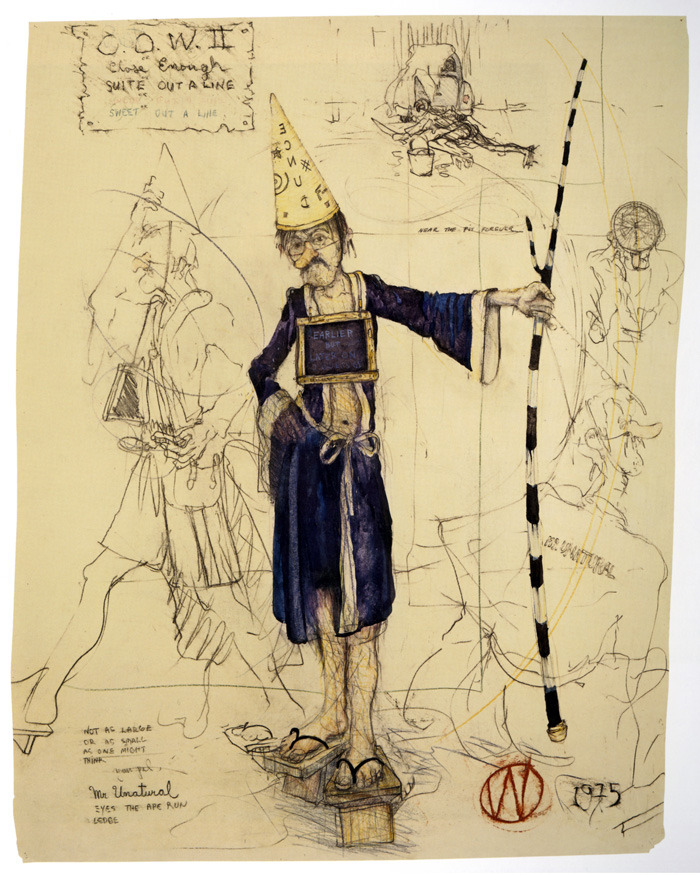
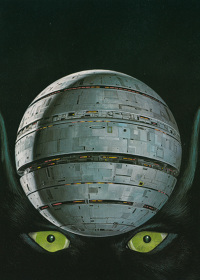
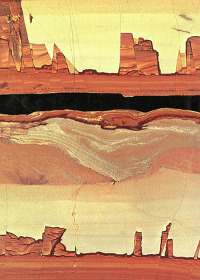
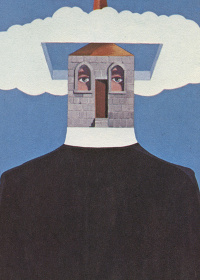
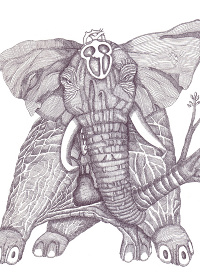
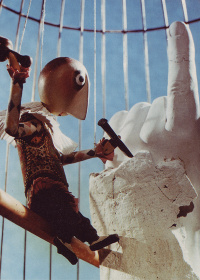
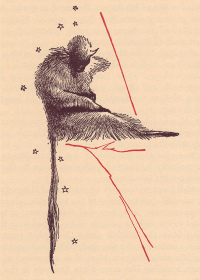
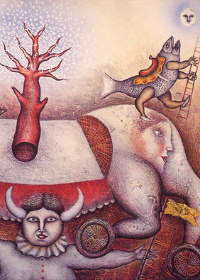
William T. Wiley, Mr. Unnatural Eyes the Ape Run Ledge, 1975. (© the artist)
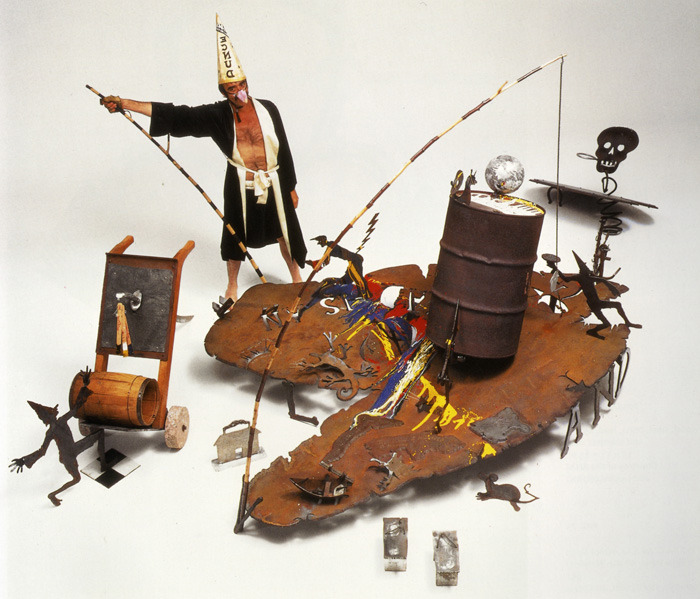
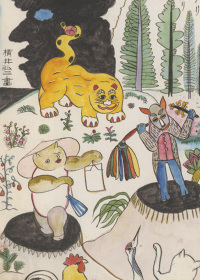
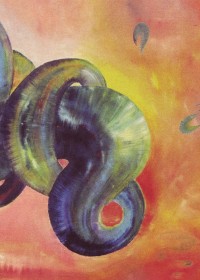
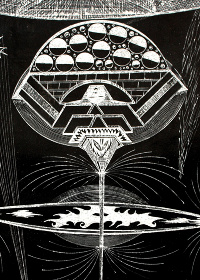
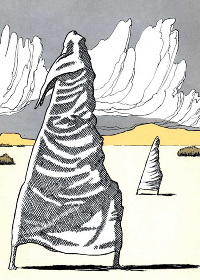
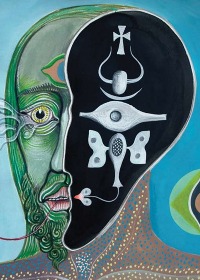
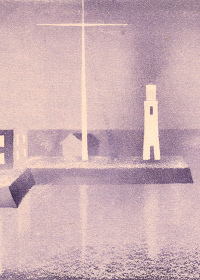
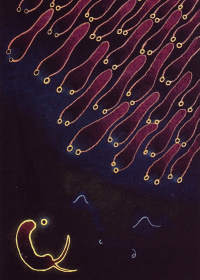
William T. Wiley, Nomad Is an Island, 1981. (© the artist)
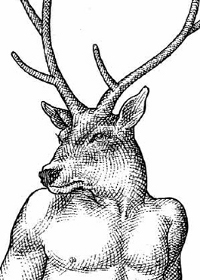
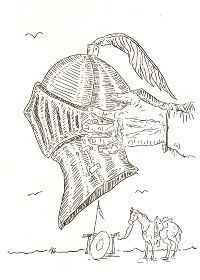
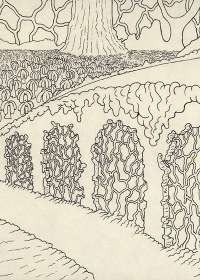
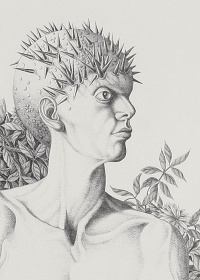
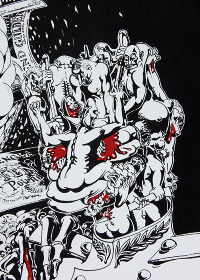
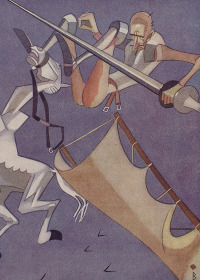
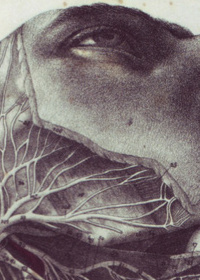
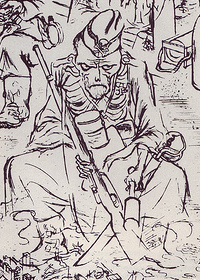
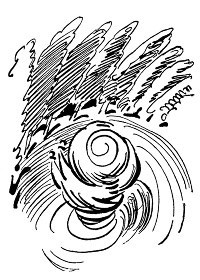
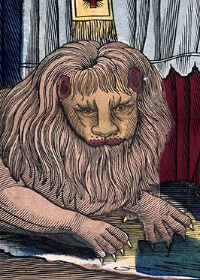
Wiley agreed in the end, of course, and created a total of 97 illustrations for the two volumes. Hoyem sent him lists of scenes that he felt needed illustration, and Wiley worked with these and also came up with ideas of his own. These include such iconic images as Quixote tilting at the windmills, the slashing of the wineskins, and Sancho Panza being tossed in a blanket.
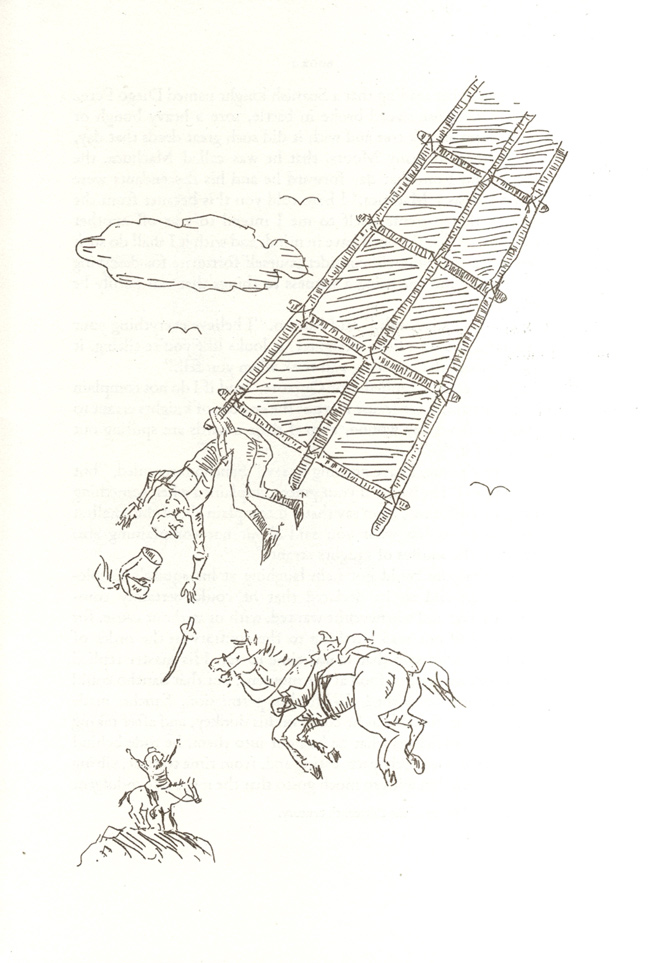
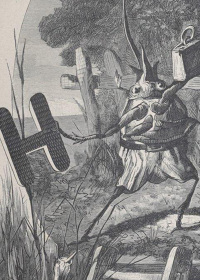
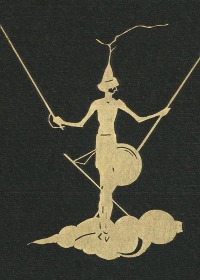
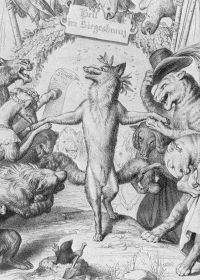
Don Quixote and Rocinante are vanquished by a windmill.
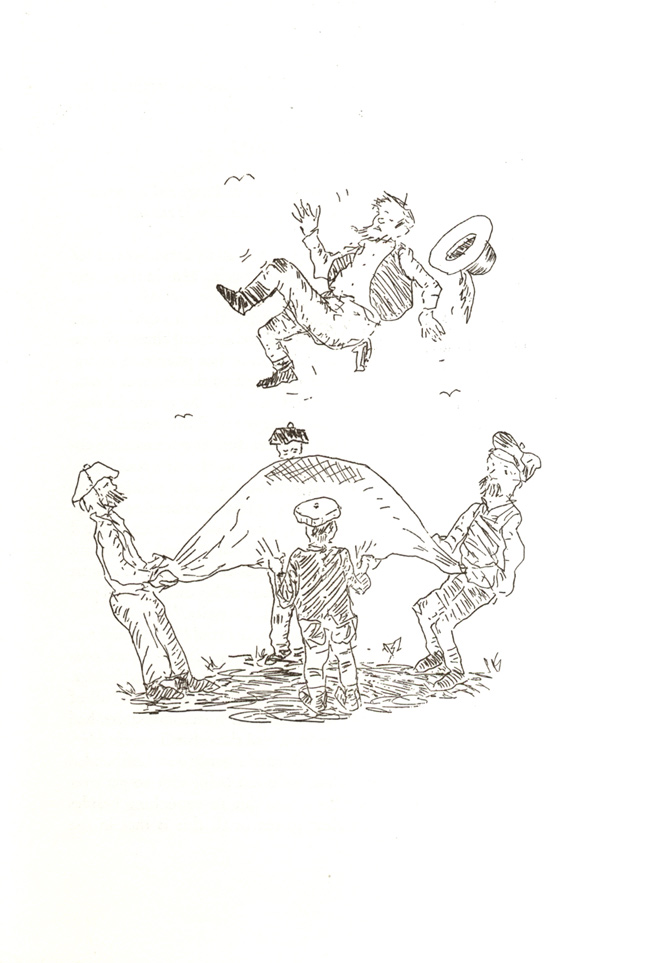
Residents of the inn toss Sancho Panza on a blanket.
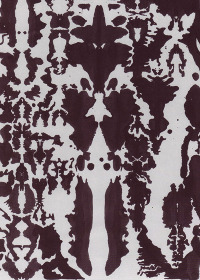
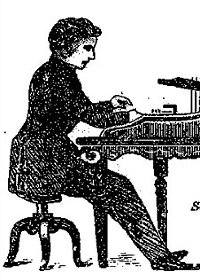
Wiley created the illustrations by drawing with an etching needle on film, which was then used to make polymer plates for relief printing. Proofs were sent to Wiley to check, and in some cases he would add to the drawings or make corrections. The illustrations are printed in sepia ink, the type in black, and the initial caps on the chapter openers are reddish brown. Wiley designed the DQ monogram on the front covers of both volumes, and also created a separate print as well. In the ten years between the publication of the original volumes one and two, an impostor wrote a sequel and tried to pass it off as Cervantes’ edition of part two. Cervantes got his revenge, and Wiley’s print shows Don Quixote at a printing house, discovering this false edition.
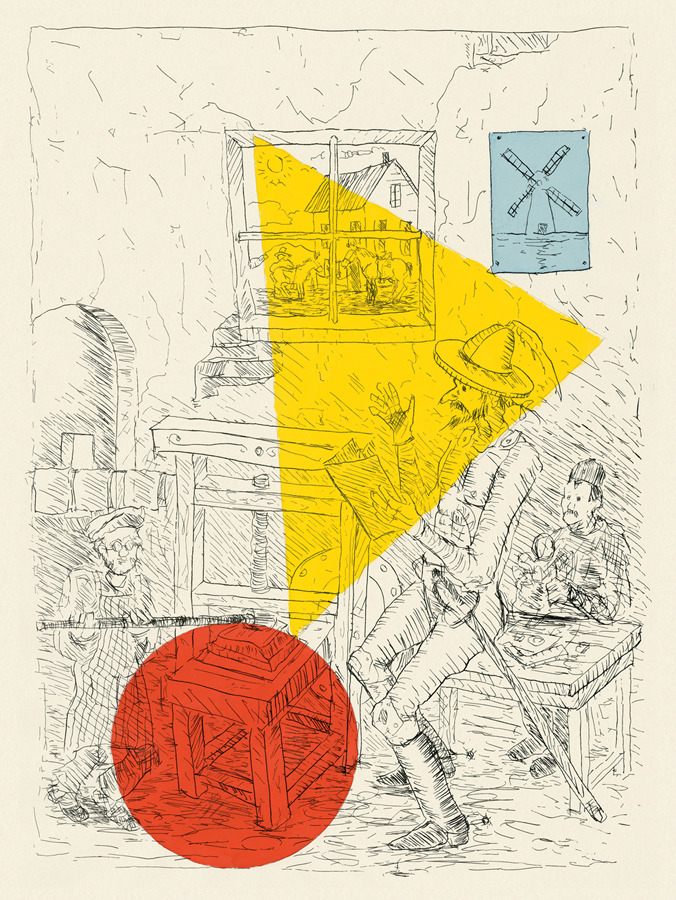
“Don Quixote in a Printing House in Barcelona”
Color relief print, black and 3 colors
24 x 18 inches on T. H. Saunders mouldmade
Edition: 40, 5 PPs, and 5 APs, sold together with the 2-volume set
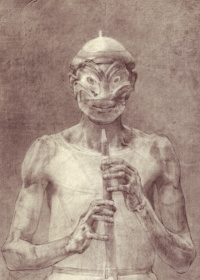
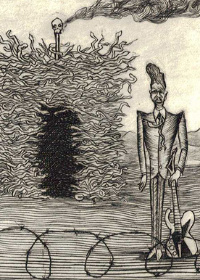
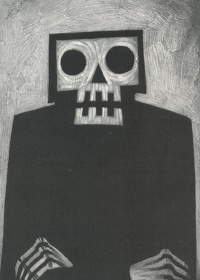
Wiley compared himself and his aspirations for his work to the character of Don Quixote in that he felt that he too “tried to set right what’s askew in the world.” His art often takes a moral stance, and tries to address what concerns or worries him about the state of the world, and the ways that people interact with each other, both as individuals and as nations. Wiley’s forty-year career has included drawing, painting, print-making, and sculpture, and many of his works are combinations of these, often with elements of text as well. A major retrospective of his work was shown at the Smithsonian American Art Museum from October 2, 2009 to January 24, 2010, and later traveled to the Berkeley Art Museum. As Wiley mentioned, there is a bit of Don Quixote in Mr Unnatural, and I think in Wiley’s character Mr. Bones as well.
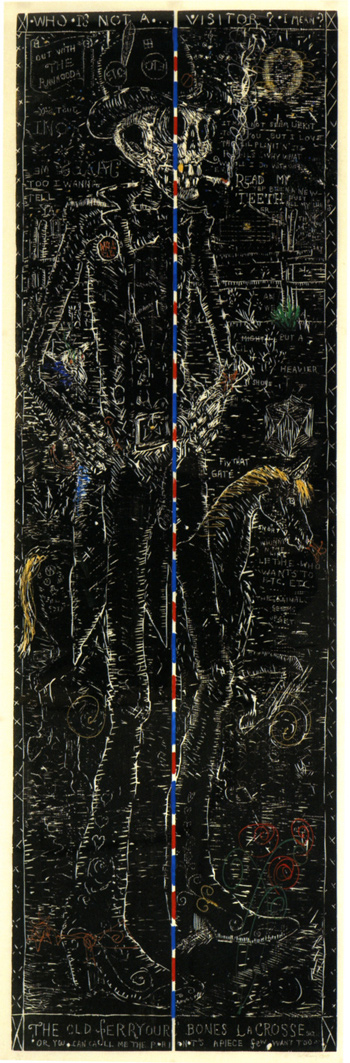
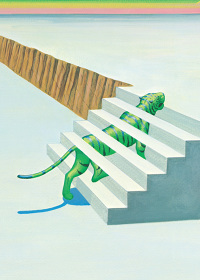
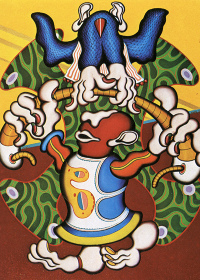
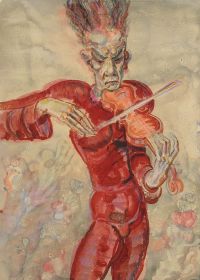
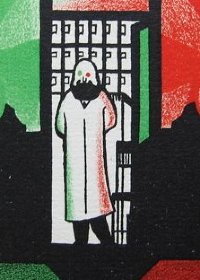
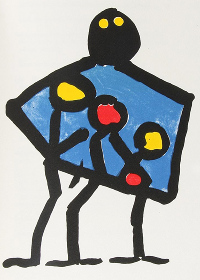
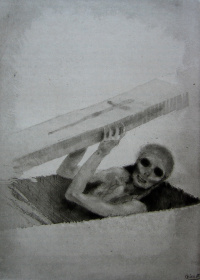
William T. Wiley, Mr. Bones, 1989. (© the artist)
Andrew Hoyem founded Arion Press in 1974, and is clearly quite pleased with these new books (with good cause). Arion Press has published nearly ninety books over the years, including volumes with artwork by John Baldassari, Jasper Johns, Alex Katz, Robert Motherwell, and Kiki Smith. Wiley also created illustrations and a print for the Arion Press edition of Elias Canetti’s The Voices of Marrakesh, which includes photographs by Karl Bissinger, and Godot, an imaginary staging of the play by Samuel Beckett.
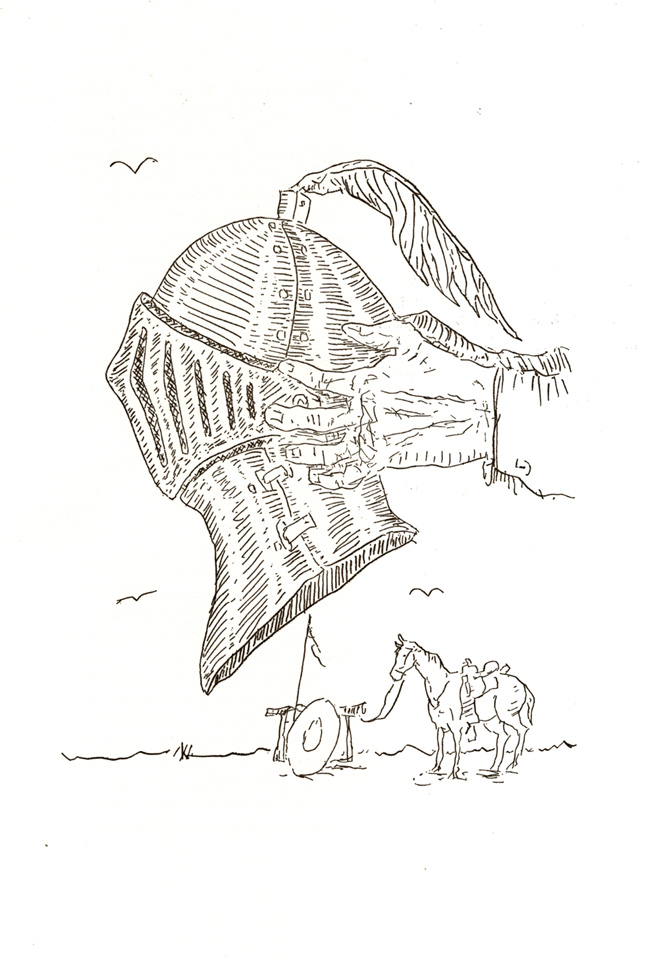
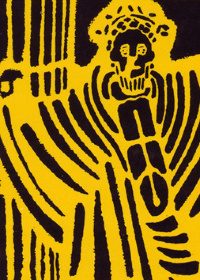
The bachelor gives Don Quixote a rusty sallet helmet.
An exhibition at Queen Sofia, “Reimagining Don Quixote,” presents a selection of illustrated pages from the books, preliminary sketches and a painting by Wiley, and a display of the binding tools with books in several stages of assembly. Its great to see the evolution of the sketches to the final book, and to have a chance to read some of the text, and admire the type design. The book is printed in two volumes, 576 and 632 pages respectively, and bound in goatskin. The books have hand-sewn bindings and headbands, and are presented in slipcases. These volumes are truly remarkable works of art and craftsmanship, and the opportunity to see the actual process of sewn binding is quite interesting. The show runs until April 20th.
At dinner afterward, we were discussing the book, and how you would enjoy such a work of art. Unlike a painting or sculpture, you don’t automatically see an illustrated book every time you walk by. More like a musical recording, you need to make an effort to experience it. And, priced at $4000 for the set, would you even be able to bring yourself to read it? Certainly it would be a very different, and more focused, reading experience than most. This isn’t the sort of book you would read on the subway, or propped up on your desk with a sandwich in the other hand. This is the kind of book that calls for good light, a comfortable chair, and your complete and undivided attention. Though actually, that sounds like the kind of reading we all wish we had more of, and these gorgeous volumes would certainly reward such an effort.
For more information about Arion Press, please visit www.arionpress.com. For more of William T. Wiley’s artwork, please visit www.williamtwiley.com. As well, the catalog of his Smithsonian show, What’s It All Mean: William T. Wiley in Retrospect is an excellent resource.
(Artwork by William T. Wiley © William T. Wiley. Images of and from the two volumes of Don Quixote, © Arion Press.)
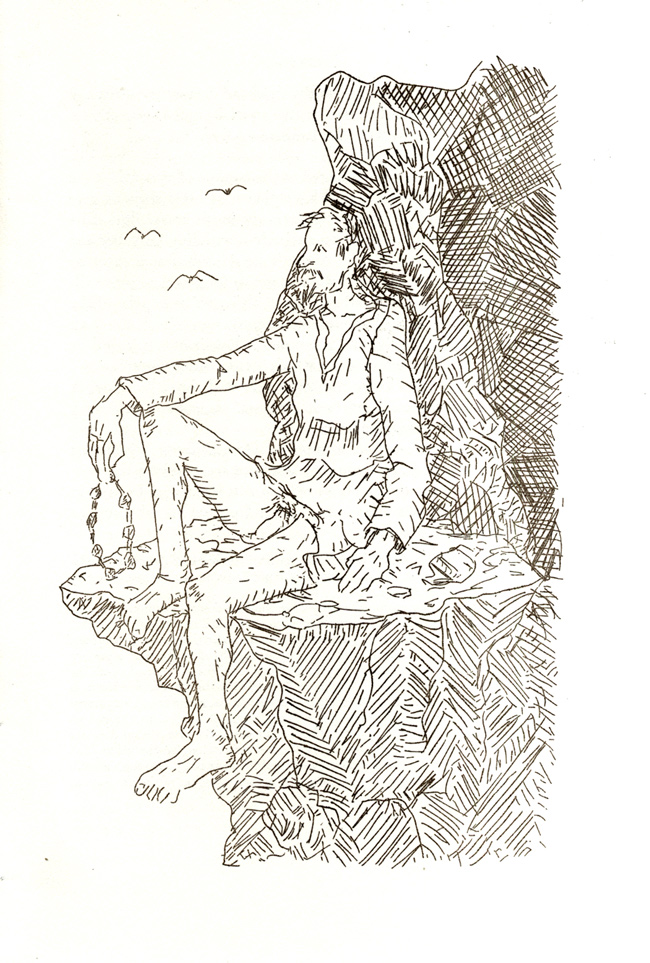
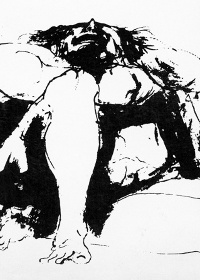
Don Quixote does penance, wearing only his shirttails.
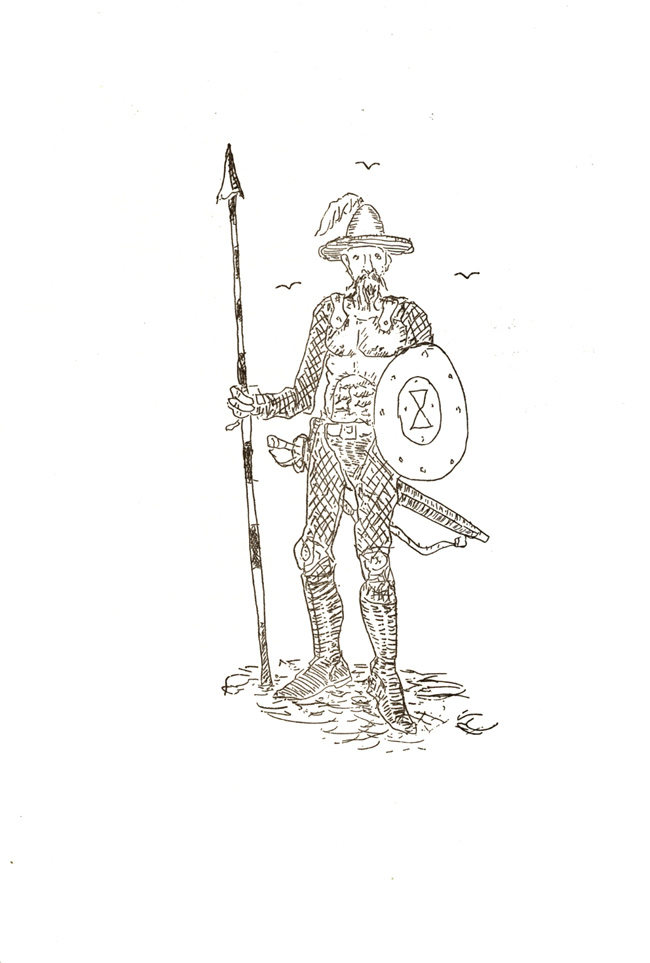
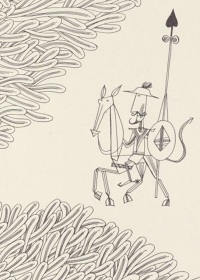
Don Quixote armed and in armor.